06/05/2026 | Social MediaStrategy


Many businesses try to measure LinkedIn like it’s a ‘last click’ channel, but LinkedIn is rarely where the conversion happens. It is however, where buyers make up their mind and the channel where they read, watch, check your profile and scope out your team for positive signs of competence.
Then, in most instances they’ll disappear!
Weeks later they come back via a completely different channel. Whether that’s direct traffic to your website, a branded Google search, an intro from a colleague or a sales conversation that starts with “I’ve been following you for a while.”
This results in your tracker or CRM giving LinkedIn zero credit, but that doesn’t mean LinkedIn didn’t influence the deal, it just means we’re measuring the wrong attribution.
And this is usually where the evidence shows up – not in Analytics, but in what people say.
We hear it all the time (for us and for clients): “Oh, I’ve been seeing your posts on LinkedIn.” Sometimes it’s “I saw you were at X event” or “Didn’t you work with X?,” but it’s the same thing underneath.
That’s influence. It’s social proof, familiarity and lowered risk, and it often lands long before the enquiry does.
The job LinkedIn actually does
For most UK SMEs, LinkedIn isn’t a performance channel in the traditional sense in that it’s not…
- A channel that reliably generates instant enquiries
- Something you can neatly track from post to sale
- A line in a report that proves its worth in one month
Often, frustration comes from the expectation that LinkedIn behaves like paid search or email, but it isn’t there to force a decision, it’s there to help people feel comfortable making one later.
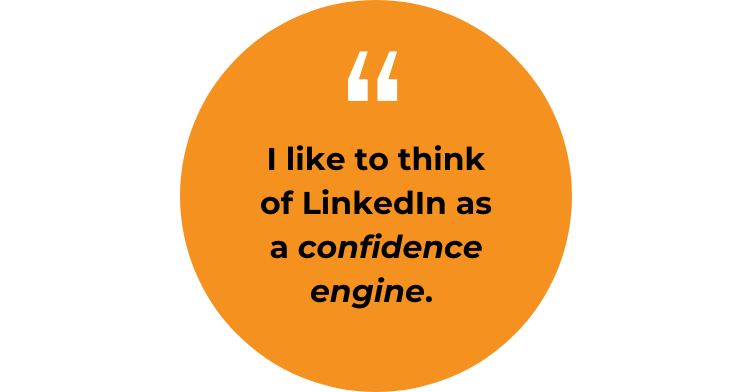
I like to think of LinkedIn as a confidence engine.
It’s where buyers sanity-check your expertise and look for signs that you understand their world, so by the time someone gets in touch the decision is often half made.
Why attribution breaks down
Attribution models were built for short purchase cycles and obvious actions, but most B2B buying journeys don’t look like that anymore.
They look more like this…
- Someone sees a post from a founder or senior leader on LinkedIn
- They don’t engage (because most people don’t yet)
- A week later they see another post
- They click through to the profile
- They notice the team seems active and credible
- They screenshot a post and drop it into their team chat or forward as a DM
- Two weeks later, they Google the company name
- The enquiry comes through “direct traffic”
At no point did LinkedIn get a clean, trackable win but if you remove it from the journey the confidence collapses. Therefore, the deal was influenced by LinkedIn but not recorded.

The mistake we keep making
LinkedIn doesn’t behave like paid search or email, so it often gets judged unfairly if it doesn’t drive immediate leads or show up neatly in Google Analytics. It usually gets labelled as “brand” or “nice to have” (or worse, “not working”).
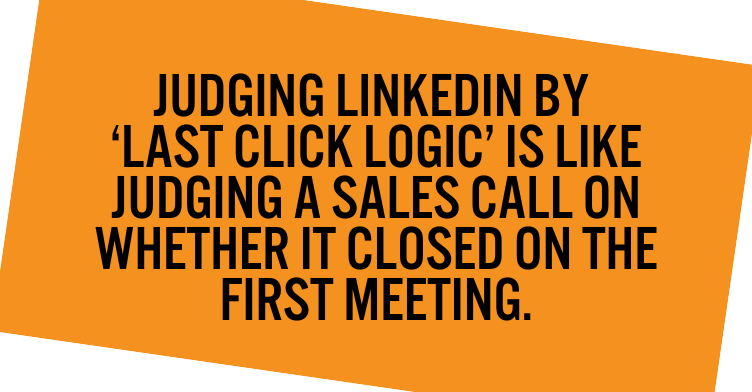
Judging LinkedIn by ‘last click logic’ is like judging a sales call purely by whether it closed on the first meeting because it ignores timing, trust, familiarity and risk reduction, which are all things buyers care about.
Buyers are watching more than you think!
One of the biggest misconceptions about LinkedIn is how people use it. I often hear things like, “they don’t all engage” and “they don’t all comment or like”.
But, they do observe!
They notice the often-overlooked metrics like:
- How founders talk about their work
- Whether a company has a clear point of view
- If the team shows up regularly or disappears for months
- Whether the content sounds lived-in or AI generated
For SMEs in particular, this matters even more because budgets are tight and the risk feels higher, so confidence becomes the conversion.
Why team activity matters
It is true that people trust people more than logos. So when your leadership team posts consistently, your buyers get familiar with how you think. When multiple team members post thoughtfully, it creates something subtle but powerful and buyers start to think,
“It feels like there’s real people behind the brand, not just marketing noise.”
That credibility doesn’t show up in a dashboard, but it does show up in sales cycles that move faster and objections that feel softer.
So how should SMEs measure LinkedIn instead?
Not by asking:
“How many leads did it generate this month?”
But by asking:
- Are more prospects mentioning LinkedIn on calls?
- Are deals progressing faster than before?
- Is your brand search volume increasing?
- Are inbound leads more educated when they arrive?
- Do sales conversations start warmer?
LinkedIn works when it reduces friction not when it forces action. That’s a different job and needs a different yardstick.
The opportunity most businesses miss
Many SMEs post sporadically on LinkedIn without intention or focus and stop when results aren’t immediate.
However, when LinkedIn is treated as a place to articulate a point of view and a space to educate rather than pitch it turns into “we’ve been seeing your posts everywhere.” That’s LinkedIn doing its job!
Final takeaway
If your LinkedIn activity isn’t getting credit it doesn’t mean it isn’t working, it means it’s doing something more valuable than chasing clicks by building belief, which is what influences decisions long before attribution catches up.